Ever wondered why your digital creations sometimes have weird distortions or unwanted noise? Getting high-quality results is not just about creativity. It also needs precise control over your tools. A structured library of negative prompts helps filter out common errors that mess up your work.
These specific instructions are like a shield, keeping your final output clean and professional. Learning these techniques lets you refine your ai output with great precision. This way, you can get rid of common flaws often seen in porn-related content.
Knowing how to manage these settings is key for any creator wanting to improve. This guide gives you the basics to fix visual artifacts and get consistent, high-quality results every time.
Key Takeaways
- Learn how to identify and remove common visual artifacts in your generated media.
- Discover the power of structured exclusion lists to improve overall image clarity.
- Master the art of refining your creative output through precise technical instructions.
- Understand how to maintain professional standards in your digital projects.
- Gain practical skills to ensure your final results align with your original vision.
Understanding Common PornWorks Artifacts
Learning to create with AI starts with knowing how to spot and fix common errors. These mistakes often come from how AI models understand and use text prompts. Knowing this helps you fix ai issues before they mess up your work.
Identifying Anatomical Distortions
One big problem is when AI gets human body shapes wrong. It might add extra fingers or mix up joints. Precision is key when fixing these body shape mistakes.
Look for how limbs connect to the body. AI models sometimes get this wrong, making limbs look like they’re bending in weird ways. Spotting these mistakes helps you fix your AI’s body shape issues.
Addressing Texture and Lighting Glitches
Skin textures can look too smooth or fake. This happens when AI lacks detail in its training data. To fix this, you need to spot when lighting doesn’t look natural.
Lighting problems can make scenes look fake. They might have harsh or flat highlights. Fixing these lighting issues is crucial for a professional look in your AI-generated media.
Recognizing Style Inconsistencies
Style problems happen when AI mixes different artistic styles or doesn’t match your desired look. A scene might start realistic but then become abstract. Spotting these changes early helps you fix ai issues and keep your project consistent.
These style changes often come from unclear or conflicting prompts. Learning to identify these helps you keep your images consistent. Consistency is what makes a creator skilled in using AI.
The Role of Negative Prompts AI Porn
To get high-quality AI images, you need to tell the model what not to do. Using negative prompts ai porn helps set limits. It acts like a filter, removing unwanted parts before the image is complete.
How Negative Prompts Influence Diffusion Models
Diffusion models start with noise and refine it into an image. Negative prompts guide the model, telling it to avoid certain areas. This is key for avoiding mistakes like wrong limbs or blurry textures.
By telling the model what not to include, you focus on what you want. This makes the model generate images that match your vision. Using negative prompts ai porn lets you control the AI’s complex math.
Why PornWorks Requires Specific Negative Constraints
Creating detailed human images is hard. Standard prompts can’t always get it right. That’s why specific rules are needed to avoid common mistakes.
Without these rules, images might look unnatural or have wrong body shapes. A good set of negative prompts ai porn keeps your images looking right. It makes sure the model gets the balance between real and artistic.
Balancing Positive and Negative Weighting
Finding the right mix of positive and negative prompts is key. Too much negative can make images dull. Too little can introduce errors.
Try different weights to find what works best for your model. By adjusting your negative prompts ai porn, you can create stunning images. This trial and error is how you get better at making top-notch content.
Setting Up Your Negative Prompt Environment
Creating a strong AI generation workflow starts with a good software setup. A well-organized workspace helps you control the output better and saves time. Using negative nsfw prompts well means setting up your system right for specific needs.
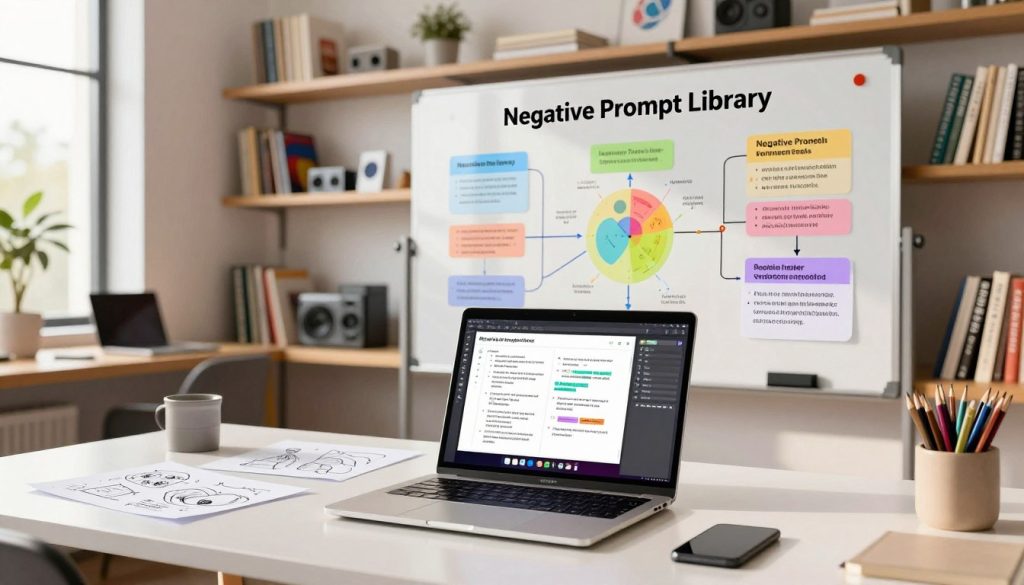
Configuring Stable Diffusion WebUI for NSFW Content
First, make sure your Stable Diffusion WebUI is ready for adult content. Go to the settings and check that your model paths are set up correctly. Proper configuration stops errors like missing assets or safety-bypass modules.
Also, check your command-line arguments for the right permissions. This lets you use negative nsfw prompts smoothly. A stable environment means better results for all your projects.
Managing Embedding Files and Textual Inversions
Embedding files and textual inversions are key for better generation. They tell the model what to avoid, like negative nsfw prompts. Keep these files in your “embeddings” folder for quick access.
It’s good to check your inversions often. Remove old files that don’t match your current model. A tidy folder keeps your system fast, even with more files.
Organizing Your Prompt Library for Quick Access
Being efficient is crucial for a top-notch workflow. Organize your negative nsfw prompts into groups like anatomical fixes or style changes. This makes switching between prompts easy.
Use a spreadsheet or prompt manager to track your best prompts. This way, you can easily get great results with different models. Here’s how to organize your library for the best results:
| Category | File Type | Primary Benefit |
|---|---|---|
| Anatomical | Textual Inversion | Fixes limb and digit errors |
| Texture | Negative Embedding | Removes plastic skin looks |
| Lighting | Standard Prompt | Corrects exposure issues |
| Composition | Negative Embedding | Reduces background clutter |
Essential Negative Prompts for Anatomical Accuracy
Creating realistic human forms in AI can be tough. But, you can fix AI issues by using precise negative prompts. These prompts steer the model away from common mistakes that ruin quality. By updating your negative library, your characters will have natural looks and clear features.
Fixing Extra Limbs and Digit Errors
Hands and feet are often wrong in AI models. Add terms like extra fingers, fused digits, and mutated hands to your prompts. This helps the model focus on real human anatomy instead of weird patterns.
Correcting Facial Features and Eye Alignment
Facial symmetry is key for believable characters. Use negative prompts like asymmetric eyes, crossed eyes, and distorted mouth to fix AI issues. These tags keep the face aligned, avoiding the uncanny valley effect.
Resolving Body Proportion Issues
Body proportions can look off due to training data. Add terms like long torso, short legs, and disproportionate limbs to your prompts. This ensures your characters look balanced and professional.
| Anatomical Category | Primary Negative Prompt | Expected Result |
|---|---|---|
| Digit Accuracy | extra fingers, fused digits | Correct hand structure |
| Facial Integrity | asymmetric eyes, bad teeth | Natural facial expression |
| Body Proportions | long torso, short legs | Balanced human frame |
Using these negative constraints is the best way to fix AI issues. Regularly update your library to see big improvements in your generated content’s anatomy.
Refining Skin Texture and Surface Details
Many creators face the challenge of AI-generated skin looking too smooth and plastic. This can ruin the feel of your project. By using specific constraints, you can make your results look more natural and real.
Removing Unnatural Plastic or Waxen Looks
The “waxen” look comes from algorithms that smooth out too much. This loses the fine details of skin. To fix this, add terms like “plastic skin,” “smooth skin,” and “airbrushed” to your negative prompts. These negative prompts ai porn settings help the model focus on texture over perfect looks.
Also, include keywords for skin imperfections in your positive prompts. Use terms like “skin pores,” “fine lines,” and “natural skin texture”. This mix stops the model from making skin look like a doll’s.
Eliminating Artifacts in Skin Rendering
Artifacts like blotchy patches or color shifts can mess up your skin. These glitches can spoil a great image. To avoid them, exclude terms like “blotchy,” “mottled,” and “pixelated skin” from your prompts.
Keep an eye on your output for these issues. If you see color banding, add “color banding” or “posterization” to your negatives. This ensures your images are always clear and detailed.
Enhancing Realism with Negative NSFW Prompts
To keep your work professional yet realistic, use negative nsfw prompts wisely. These prompts help avoid bad styles that lead to poor quality. They keep your designs real and grounded.
The table below shows common skin problems and how to fix them with negative terms:
| Issue Type | Negative Prompt Term | Expected Result |
|---|---|---|
| Surface Texture | plastic, waxen, airbrushed | Increased pore visibility |
| Rendering Glitch | blotchy, mottled, pixelated | Smooth, consistent skin tone |
| Lighting Artifact | overexposed, flat lighting | Better depth and contouring |
| Style Inconsistency | cartoon, anime, 3d render | Enhanced photorealism |
By using these negative nsfw prompts regularly, your work will always look polished. Remember, the goal is to guide the model toward realistic human anatomy. With these negative prompts ai porn tips, you’ll improve your visual quality a lot.
Advanced Techniques for PornWorks Polish
You can turn simple images into stunning art with advanced techniques. To achieve a top-notch pornworks polish, you need to go beyond basic steps. Using special tools helps you get the precision needed for professional results.
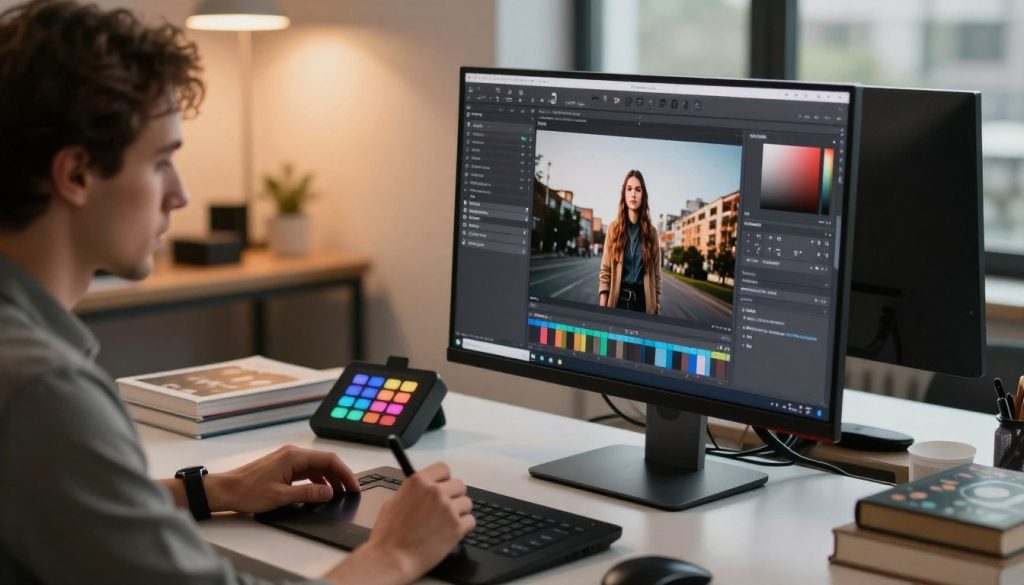
Using Negative Embeddings for Style Control
Negative embeddings are like filters that catch specific styles missed by basic prompts. They let you instantly remove unwanted styles from your images. This ensures your work looks consistent and high-quality every time.
“True artistic control in AI generation comes from the ability to define not just what you want to see, but exactly what you refuse to accept in your frame.”
Layering Negative Prompts for Complex Scenes
For detailed scenes, one negative prompt isn’t enough. You need to layer your negative constraints to handle various issues at once. This method keeps your scene stable and attractive.
Here’s how different layers of negative constraints help your pornworks polish:
| Constraint Layer | Primary Focus | Expected Outcome |
|---|---|---|
| Structural | Anatomy and Limbs | Improved skeletal accuracy |
| Surface | Skin and Texture | Removal of waxen artifacts |
| Stylistic | Lighting and Depth | Enhanced professional finish |
Troubleshooting Persistent Generation Errors
Even with advanced setups, some errors can be hard to fix. If you hit a snag, systematically adjust your negative prompt layers to find the problem. Start by disabling custom embeddings to see if the issue goes away, then add them back one by one.
This method is key to keeping your pornworks polish high. By tracking which combinations fix issues, you build a useful library for future projects. Being consistent is crucial for a skilled creator, and these advanced techniques are the key to your success.
Optimizing Lighting and Composition
Lighting and composition are key to a great image. Mastering them makes your work feel professional and engaging. Even the best subject can be ruined by a bad background or focus.
Fixing Overexposed or Underexposed Areas
Bad lighting can mess up a perfect scene. If your image is too bright or dark, try using prompts like “overexposed” or “crushed blacks.” This helps keep the image balanced.
“Composition is the strongest way of seeing.”
Removing Unwanted Background Clutter
A messy background takes away from your main focus. Use prompts like “crowded background” to keep things clean. This makes sure your subject stands out, which is key for pornworks polish.
| Issue | Negative Prompt | Result |
|---|---|---|
| Clutter | “messy, busy background” | Clean focus |
| Lighting | “overexposed, harsh light” | Soft, natural tone |
| Perspective | “distorted, wide angle” | Correct proportions |
Correcting Perspective and Depth of Field Issues
Wrong camera angles can make scenes look odd. Use prompts like “fisheye lens” to fix this. This ensures your image looks real and well-balanced.
Testing and Iterating Your Prompt Library
To get consistent visual quality, you need to test your prompt library well. Think of your generation process as a series of experiments. This way, you can fix AI issues that often come up in complex scenes.
By refining your negative constraints, you can get the precision you want. This cycle helps you improve your prompts until they’re just right.
Establishing a Baseline for Comparison
First, you need a reliable baseline to measure your progress. Pick a standard seed and positive prompts that always produce specific errors. Keeping these variables the same helps you see how your negative prompts affect things.
Comparing side-by-side results is the best way to check if your changes work. If a new negative prompt fixes a distortion without messing up the scene, you’ve improved it. This way, you avoid introducing new problems while trying to fix AI issues.
Documenting Successful Prompt Combinations
It’s crucial to log your experiments well for long-term success. Write down any successful combinations right away. Use a spreadsheet or text file to track which negative prompts work best for different character types or lighting.
Documentation helps you avoid repeating mistakes. It also builds a robust library of solutions for future problems. Over time, this collection becomes a key resource for keeping your work at high standards.
Automating Workflow with Prompt Templates
Once you’ve found the best negative prompts, save them as templates. Most interfaces let you save prompt presets, saving you time. Using these templates, you can apply proven fixes quickly without starting over.
Automation is the last step in mastering prompt engineering. It lets you focus on creativity while keeping the technical side stable. With a well-organized library of templates, you can fix AI issues confidently and fast, keeping your output professional and polished.
Best Practices for Maintaining High-Quality Output
As AI technology grows, your approach to handling negative nsfw prompts must evolve. Keeping your creative workflow reliable is key, especially with new software updates. View your prompt library as a dynamic resource to sidestep common issues and uphold quality.
Updating Prompts for New Model Versions
Each new model version introduces a fresh dialect that reads instructions in its own way. It’s crucial to review your negative nsfw prompts when switching models. What works for one model might not work for another.
Test your prompts with the new model to see if they still meet your needs. You might need to tweak certain weights to match the updated training data. Regular testing keeps your library up-to-date.
Sharing and Collaborating on Prompt Libraries
Working together can improve your negative nsfw prompts collection. Joining online communities lets you learn new methods and solve problems with others. Sharing your successes can also reveal how different setups affect your work.
Always note the model version when sharing your work. This makes it easier for others to replicate your results and understand the impact of specific constraints. A shared library makes everyone’s work more efficient.
Avoiding Over-Prompting and Model Degradation
Don’t overload your AI with too many constraints. Over-prompting can cause model degradation, leading to unclear or messy images. Strive for a balanced use of negative nsfw prompts to keep the model sharp.
If your images start to lose detail or become too stylized, try removing less effective prompts. Simplicity often leads to better results than a long list of negative constraints. Prioritize quality over quantity to preserve your output’s integrity.
Conclusion
Building a strong negative prompt library changes how you work with Stable Diffusion models. You can now improve body details and textures with great accuracy. The key to getting top-notch results is to keep practicing and refining your work.
By trying out new prompt mixes, you keep your work fresh and up-to-date. This focus on quality adds a unique touch to your projects. You can control complex scenes by adding more constraints and managing your files well.
The world of AI art is always changing fast. Keeping up with updates to your favorite models helps you work better and faster. Use these tips to make your digital art even better and reach new levels of quality. Your skill in these areas sets the bar for your work.
FAQ
Identifying Anatomical Distortions
When using Stable Diffusion, you might see anatomical distortions. These are when the AI gets the human body wrong. You might see long necks or “spaghetti limbs.” To fix this, use negative prompts to guide the model.
Addressing Texture and Lighting Glitches
Texture glitches look like “noise” on skin. Lighting issues can cause multiple lights. These problems happen when the AI gets high-contrast areas wrong. Use specific prompts to keep skin smooth and lighting right.
Recognizing Style Inconsistencies
Style issues happen when AI mixes real and illustrative styles. To keep a professional look, spot when AI introduces unwanted styles. Use prompts to filter out these styles and keep your project’s visual integrity.
How Negative Prompts Influence Diffusion Models
Negative prompts tell Stable Diffusion what not to do. They set boundaries to avoid unwanted pixels. This ensures your image is high-quality and free of common artifacts.
Why PornWorks Requires Specific Negative Constraints
PornWorks needs special constraints because standard models often fail. Without these, AI might produce low-quality images. Specific prompts help avoid “muddy” textures and incoherent compositions.
Balancing Positive and Negative Weighting
Successful prompt engineering balances weights. Too much negative prompt can wash out the image. Too little, and fix ai issues like artifacts won’t be fixed. Find the right balance for resolution.
Configuring Stable Diffusion WebUI for NSFW Content
To work efficiently with NSFW content, set up your AUTOMATIC1111 or Forge WebUI right. Adjust Sampling steps and choose the right Checkpoint model. This ensures your environment handles complex content well.
Managing Embedding Files and Textual Inversions
Textual Inversions and embeddings are shortcuts for long lists of negatives. Place them in your “embeddings” folder. This makes filtering data quick and easy.
Organizing Your Prompt Library for Quick Access
Keep your structured library of prompts organized. Use tools like Notion or text files. Categorize your negative nsfw prompts for quick access and to fix ai issues fast.
Fixing Extra Limbs and Digit Errors
Extra limbs or “mutated fingers” are common issues. Use terms like “extra digits,” “fused fingers,” and “too many legs” in your prompts. This helps Stable Diffusion focus on correct anatomy.
Correcting Facial Features and Eye Alignment
Facial rendering can lead to “lazy eyes” or asymmetric features. Include keywords like “crossed eyes,” “disfigured face,” and “bad anatomy” in your prompts. This ensures facial features are symmetrical and realistic.
Resolving Body Proportion Issues
To avoid “long necks” or “disproportionate torsos,” tell the AI to avoid “malformed limbs” and “proportional errors.” This ensures your characters look grounded and realistic, avoiding the “distorted” look.
Removing Unnatural Plastic or Waxen Looks
To avoid the “plastic” AI look, use negative nsfw prompts like “oversmoothed skin,” “waxen textures,” and “airbrushed.” This encourages natural skin features like pores and fine lines, making the result more lifelike.
Eliminating Artifacts in Skin Rendering
Artifacts like “discoloration” or “splotchy skin” can be fixed with negative keywords. Use “blurry,” “low quality,” and “mottled skin” to ensure consistent skin rendering. This maintains the pornworks polish needed for professional media.
Enhancing Realism with Negative NSFW Prompts
Realism comes from what you exclude as much as what you include. By excluding “CGI,” “3D render,” and “sketchy,” you force the Stable Diffusion model to focus on photorealistic data. This leads to higher visual fidelity in your final outputs.
Using Negative Embeddings for Style Control
Advanced users use negative embeddings from Civitai for detailed style control. Embeddings like Deep Negative are trained to remove “ugly” parts of an image. This provides a polished look that’s hard to achieve with text alone.
Layering Negative Prompts for Complex Scenes
For complex scenes, layer your negative prompts. Use a general prompt for the background and specific prompts for characters. This ensures every element of the composition is error-free.
Troubleshooting Persistent Generation Errors
If an error persists, troubleshoot by isolating variables. Remove negative prompts one by one to find the conflicting one. Also, check if your CFG Scale is too high, causing “deep-fried” visual artifacts.
Fixing Overexposed or Underexposed Areas
To fix lighting issues, include “overexposed,” “blown out,” and “harsh shadows” in your prompts. This balances the dynamic range of the image, ensuring details in both highlights and shadows are visible and crisp.
Removing Unwanted Background Clutter
A professional composition should be clean. Use prompts like “cluttered background,” “extra people,” and “distracting elements” to keep focus on your main subject. This ensures the storytelling of the image isn’t lost in unnecessary details.
Correcting Perspective and Depth of Field Issues
If images look “flat,” improve the depth of field by prompting against “flat lighting” and “wide angle distortion.” This encourages a more cinematic look with clear foreground and background separation.
Establishing a Baseline for Comparison
To see if your negative nsfw prompts work, establish a baseline. Generate an image with a fixed Seed and no negative prompt, then add your library and compare. This scientific approach measures the exact improvement in quality.
Documenting Successful Prompt Combinations
When you find a perfect pornworks polish combination, document the Checkpoint, Sampler, and Negative Prompts used. Keeping a log of these “golden” settings allows consistent high-quality results across projects.
Automating Workflow with Prompt Templates
Use templates in your WebUI to automate your negative prompt library. Set these as “Styles” for a professional-grade filter with one click. This saves hours of manual iteration.
Updating Prompts for New Model Versions
As models evolve, your prompt library must too. Newer models understand natural language better. They might need fewer “keyword-style” negatives and more descriptive constraints to avoid model degradation.
Sharing and Collaborating on Prompt Libraries
Engage with communities on Discord or Reddit for the latest fix ai issues strategies. Collaborating with other creators helps refine your negative nsfw prompts based on collective experience.
Avoiding Over-Prompting and Model Degradation
Over-prompting happens when using too many negative keywords. This can lead to “incoherent” or “generic” results. Keep your negative prompt library concise and focused to avoid this.
What is a negative prompt and why do I need it?
A negative prompt is a set of instructions for an AI model like Stable Diffusion to avoid certain elements. You need it to fix ai issues such as extra limbs or blurry textures that the model might generate by mistake.
How can I achieve a “pornworks polish” in my AI art?
To achieve a pornworks polish, combine high-quality checkpoint models with a structured negative prompt library and textual inversions. This refines skin textures, corrects anatomy, and ensures professional-grade lighting and composition.
Can negative nsfw prompts improve the realism of skin?
Yes. Using negative nsfw prompts to exclude terms like “plastic,” “waxen,” “CGI,” and “airbrushed” forces the AI to use data with real human skin details. This significantly enhances realism.
What are the best tools to manage my prompt library?
Most professionals use the Styles feature in AUTOMATIC1111 or Forge. You can also use external tools like Notion, Google Keep, or PromptHero to organize your negative prompts for quick access.
Why does my AI-generated image have “burnt” or “oversaturated” colors?
This is often a visual artifact caused by a high CFG Scale or lack of negative prompts. To fix ai issues like this, add “oversaturated,” “highly distorted,” and “deformed” to your prompts, or lower your CFG scale to between 5 and 7.
What is the difference between a negative prompt and a negative embedding?
A negative prompt is a list of text words. A negative embedding (or Textual Inversion) is a pre-trained file that filters out unwanted elements, like EasyNegative or BadDream.
How do I fix extra limbs or fingers in Stable Diffusion?
To fix extra limbs or fingers, include specific keywords in your negative prompt. Use terms like “extra limbs,” “fused fingers,” “extra legs,” and “malformed hands.” Also, use an embedding like Bad-Hands-5 from Civitai to significantly reduce these anatomical distortions.
Is it possible to over-prompt the negative field?
Absolutely. Over-prompting can confuse the diffusion model, leading to “flat” images or loss of subject detail. It’s best to keep your negative prompt library concise, focusing only on the most critical artifacts you want to avoid.