
Ever wondered why your AI images don’t look as good as those in top galleries? Many creators face issues because they don’t have a solid plan for their work.
Creating amazing digital art takes more than luck. With our ai porn prompt pack, you can skip the trial-and-error phase. Start making top-notch images right away.
This guide gives you a detailed plan for using pornworks prompts to get pro-level results. We dive into the key nsfw formulas for setting style, subject, and tech specs.
Whether you’re new or have experience with NSFW generators, these templates will boost your consistency. You’ll learn to mix LoRA settings and style weights to control your vision.
Key Takeaways
- Learn to use structured templates to save time on image generation.
- Understand how to balance LoRA and style weights for better results.
- Access a professional framework to improve your artistic consistency.
- Master technical parameters to gain full control over your output.
- Eliminate the guesswork when working with any advanced AI tool.
Understanding the Mechanics of PornWorks Prompts
Every stunning image comes from a complex system of tokens and diffusion processes. AI image generation turns your text into visuals through math. Knowing these mechanics lets you guide the AI to your creative vision.
The Role of Syntax in AI Image Generation
Good prompt engineering starts with how you write. The model sees your input as tokens, building blocks for the image. Clear syntax helps the AI focus on what’s most important.
Start your prompts with the subject, then action, environment, and style. This order helps the model get the main points right before adding details. Clear syntax means clearer results.
How LoRA Models Influence Output Quality
LoRA models are key for special looks or character consistency. They tweak the base model for specific styles or subjects. This adds detail that standard models might miss.
Think of LoRA models as fine-tuning without retraining the whole system. They let you add unique textures, lighting, and traits. Using them well is key to advanced prompt engineering.
Balancing Style Weights for Consistent Results
Getting visual harmony needs careful style weight adjustments. Too much style can ruin the image. You need to find the right balance where style enhances without overpowering.
The table below shows how different parts affect your output:
| Component | Primary Function | Impact Level |
|---|---|---|
| Subject Tokens | Defines the core character | High |
| LoRA Models | Applies specific aesthetic | Medium-High |
| Lighting Modifiers | Sets the mood and tone | Medium |
| Negative Prompts | Removes unwanted artifacts | High |
Mastering these variables helps keep your images consistent. By trying different settings, you’ll improve your AI image generation skills and create better content.
Setting Up Your Environment for Optimal Generation
Creating a stable environment is key to success with ai porn prompt packs. When your setup is right, you spend less time fixing issues. This means more time focusing on your creative ideas. A strong technical base is crucial for good AI image generation.
Configuring Model Checkpoints and VAE Settings
Model checkpoints are the heart of your NSFW generator. Make sure the checkpoint fits your desired look. Also, pair it with the right Variational Autoencoder (VAE) to avoid poor image quality.
Lighting is crucial for professional-looking images. A well-set VAE ensures your images have depth and clarity. Don’t skip this step, as it affects your image’s final look.
Managing LoRA Files and Trigger Words
Keeping your files organized is essential for a smooth workflow. Store your LoRA files in a specific folder and use clear names. This makes switching styles easy when building your ai porn prompt pack.
Each LoRA needs specific trigger words to work right. Use a text file or spreadsheet to list these words and models. This helps avoid mistakes and ensures your NSFW generator works as expected.
Optimizing Hardware Resources for Faster Iteration
Slow hardware can slow down your creativity. To speed up, focus on a GPU with lots of VRAM. This lets you work on bigger projects and higher resolutions. Also, use tools like xformers to save memory during rendering.
| Component | Recommended Spec | Performance Impact |
|---|---|---|
| GPU VRAM | 12GB+ | High (Batch Size) |
| System RAM | 32GB | Medium (Stability) |
| Storage | NVMe SSD | High (Load Times) |
Adjusting your hardware settings makes your environment more responsive. Consistent iteration helps you master complex prompts and achieve top-notch results.
Mastering PornWorks Prompts Through Structural Formulas
Unlocking your AI’s full potential starts with mastering structural formulas for prompts. Consistent, high-quality results come from a disciplined approach to how you input your prompts.
Effective pornworks prompts have five layers: Style, Subject, Scene, Action, and Technical Parameters. By arranging these layers logically, you guide the AI to create the image you want.
The Anatomy of a High-Quality NSFW Prompt
A top-notch prompt is like a recipe. It balances artistic style with subject matter to match your vision.
Using nsfw formulas wisely creates a clear hierarchy. Start with the main subject, then the setting, and end with technical details for lighting and angles.
Applying Subject-Action-Environment Sequences
The order of your words greatly affects the AI’s understanding. Place the subject first to focus on its features.
Then, describe the action to set the scene’s story. Finally, outline the environment to place the character in a cohesive space. This order helps avoid mixing up background and subject.
Utilizing Negative Prompts to Refine Visual Fidelity
Even the best pornworks prompts can lead to unwanted artifacts without negative prompts. These prompts are key to avoiding common mistakes.
By listing things like “blurry,” “distorted limbs,” or “low resolution,” you guide the model away from errors. This ensures your output is clear and professional.
Remember, precision is crucial. Improving your nsfw formulas through trial and error will help you get the look you want every time.
Implementing LoRA Weights for Stylistic Precision
Creating precise AI art is not by chance. It comes from managing weights and blending models carefully. This skill lets you control how your subjects look. It’s key for creators who want high-quality, consistent results.
Adjusting Strength Values for Character Consistency
To keep AI art consistent, balance the LoRA models you use. Most tools let you set a weight from 0.0 to 1.0. If your character looks off, try lowering the weight to 0.7 or 0.8.
Consistency can suffer if weights are too high. This makes the model over-interpret features. Start with a neutral weight and adjust in small steps of 0.1. This way, your character stays true to themselves in different settings.
Blending Multiple LoRAs for Unique Aesthetics
Layering different LoRA models can create new styles. Combining two or more models merges their data for a unique look. For example, mixing a character-focused model with an art-style model can place your character in a stylized world.
“The true power of generative AI lies not in the prompt alone, but in the subtle orchestration of weights and models to achieve a singular vision.”
Use prompt weighting to control the output. If it’s too cluttered, give more weight to your main character model. This keeps the secondary styles from overpowering the subject.
Troubleshooting Common Artifacts and Over-Training
Even with great settings, you might see image generation artifacts like distorted limbs. These problems often come from over-training. Use negative prompts to steer the AI away from common mistakes.
| Weight Setting | Visual Impact | Best Use Case |
|---|---|---|
| 0.5 – 0.6 | Subtle influence | Blending styles |
| 0.7 – 0.8 | Balanced output | Character consistency |
| 0.9 – 1.0 | Strong influence | High-fidelity details |
If your images look “fried” or too bright, your prompt weighting might be too strong. Lower the LoRA strength and check your VAE settings for color. Adjusting these can remove image generation artifacts and give you a polished look.
Categorized Prompt Formulas for Diverse Scenarios
Creating a wide range of prompt formulas is key to getting consistent results. Organizing your creative assets into categories makes the generation process smoother. These nsfw formulas are the backbone of your artistic vision.
Formulas for Photorealistic Character Portraits
For lifelike details, photorealistic prompts are crucial. Use keywords like “subsurface scattering,” “8k resolution,” and “highly detailed pores.” These ensure the AI focuses on realistic human features.
For the best results, mix these technical terms with lighting descriptions. Try “soft rim lighting” or “natural studio glow.” This combination boosts your portraits’ professional look.
Formulas for Dynamic Action and Motion Sequences
Movement scenes need a unique approach. Use keywords like “motion blur,” “dynamic pose,” and “high-speed shutter” to show energy. These nsfw formulas tell the AI the subject is moving.
“Creativity is intelligence having fun, especially when you provide the right constraints for the machine to follow.”
For a cinematic feel, add scene composition terms. Try “wide angle” or “low perspective.” These help the AI frame the action in a cinematic way.
Formulas for Atmospheric Lighting and Environmental Effects
The atmosphere sets the mood of your image. Choose keywords like “volumetric fog,” “golden hour,” or “dramatic shadows” for mood. These photorealistic prompts add depth to your work.
Refine scenes with specific color palettes. Balancing nsfw formulas with environmental details ensures a perfect background. This is what makes an AI artist skilled.
Advanced Techniques for Style Weight Manipulation
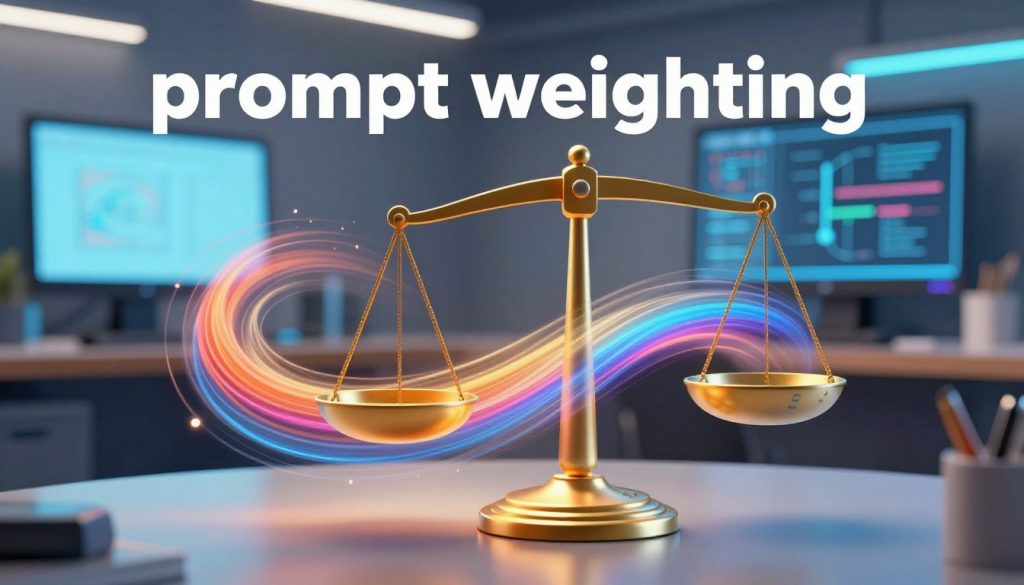
Learning to manipulate style weights can take your digital art to new heights. Basic prompts are just the start. Prompt weighting lets you control the impact of certain words on the final image. This is key for artists who need precision and quality.
Using Prompt Weighting Syntax for Emphasis
Modern AI tools have special syntax for adjusting keyword importance. By using parentheses or numbers, you can highlight certain elements. This makes sure your main subject stands out.
- Use (keyword:1.2) to increase a style’s impact.
- Apply [keyword] to lessen a descriptor’s weight.
- Blend these methods for detailed scenes.
Layering Style Modifiers for Complex Textures
Realistic textures need layering of style modifiers. Instead of one term, use several to describe texture, like “porous skin” or “reflective silk.” This adds depth that simple prompts can’t.
Layering these descriptors helps the AI create more realistic textures. Your images will feel more real and detailed. This is how you go from digital to professional art.
Fine-Tuning Skin Tones and Lighting Profiles
Professional results depend on skin tones and lighting. Define the light source and color in your prompt. For example, “golden hour lighting” changes the mood.
Use negative prompts to avoid unwanted effects like too much saturation. Pairing precise lighting with negative prompts keeps your image clean and striking. This is the ultimate set of tools for creators.
Curating Your Personal AI Porn Prompt Pack
Starting your AI art journey with a well-organized prompt library is key. Treat your generation strings as valuable assets for AI art consistency. A personal ai porn prompt pack helps you avoid trial and error, setting a solid base for your projects.
Organizing Prompts for Workflow Efficiency
Good prompt engineering starts with organizing your favorite strings. Instead of a messy text file, use a dedicated database or folder system. Label your pornworks prompts by theme, lighting, or character to save time.
Using a consistent naming system makes finding the right prompt quick. Efficiency is crucial for keeping your creative flow when working with complex models. Here’s a table to help organize your library:
| Category | Naming Format | Primary Benefit |
|---|---|---|
| Character | [Name]_[Style]_[Version] | Quick retrieval |
| Environment | [Setting]_[Lighting]_[Mood] | Context matching |
| Action | [Pose]_[Angle]_[Dynamic] | Motion accuracy |
Testing and Iterating on Successful Formulas
Test your templates to see if they work as expected. Not every prompt will work the same way, so prompt engineering needs constant tweaking. Keep track of which prompts work best and discard those that don’t.
Improving your pornworks prompts means making small changes. Document your successes to build a reliable library. This way, your ai porn prompt pack stays useful as new models come out.
Sharing and Adapting Community-Driven Prompts
Joining the community can introduce new ideas. Many creators share their pornworks prompts, offering fresh inspiration. Look for community prompts that challenge your style and encourage new looks.
Adapting these prompts to fit your needs is part of the fun. Feel free to mix and match elements to create something unique. By blending community insights with your library, you ensure AI art consistency and growth.
Safety and Ethical Considerations in AI Generation
Working with AI generation means balancing creativity with responsibility. As you improve your skills, think about how your work affects others. Keeping a high standard helps your creativity stay valued in the digital world.
Navigating Content Filters and Model Restrictions
Platforms have strict rules to keep everyone safe. Knowing these rules helps avoid trouble with your account or content. Always check the terms of service for the models you use, as they tell you what’s okay.
If you hit a block or filter, it’s a sign to change your approach. Staying compliant lets you focus on your work without losing access to tools. Here are ways to keep your work flowing:
- Regularly check platform updates regarding prohibited content.
- Use neutral language when testing new, complex concepts.
- Keep a backup of your successful, compliant prompt structures.
Responsible Use of Generated Imagery
The use of photorealistic prompts has made ethics in AI more important. You must ensure your work respects others’ rights and privacy.
“With great power comes the responsibility to use technology in a way that fosters creativity while upholding the dignity of all individuals.”
Also, you might see image generation artifacts during the process. These glitches can sometimes create unexpected visuals. It’s your job to make sure your final images meet your standards and follow platform rules.
By focusing on ethics and transparency, you help create a better environment for everyone. Remember, your reputation as a creator depends on the quality and integrity of your work. Keep exploring your art while thinking about its impact on the world.
Conclusion
Improving your AI image generation skills needs both technical skill and artistic flair. You now have the tools to turn simple ideas into stunning visuals with tools like PornWorks.
Getting better at this depends on trying out different prompts. See each try as a chance to grow your style and character models.
Your growth as an artist is linked to your commitment to AI ethics. Keeping these standards high makes your work respected in the digital art world.
Don’t stop trying new things with LoRA weights and environmental changes. Your own style will grow as you keep experimenting and refining your approach.
Join the community to share your findings and learn from others. Regular practice will make these complex steps feel natural and easy.
FAQ
What are pornworks prompts and how do they differ from standard AI requests?
Pornworks prompts are special text strings for AI models like Stable Diffusion. They are different from regular requests because they use specific formulas and weights. This ensures the AI focuses on details like skin textures and poses.
Using these prompts lets you control the final look more than basic descriptions. You get finer control over the aesthetic.
How do LoRA models enhance the quality of my ai porn prompt pack?
LoRA models are like plugins for your AI models. They let you add specific styles or themes without retraining the whole model. This means your images can have more detail and match your vision better.
They are especially useful for complex lighting or unique artistic styles.
Why are VAE settings important for generating high-quality NSFW content?
The VAE is key for turning images from a code into real pixels. If your VAE settings are off, your images might look bad. A good VAE, like mse840000, makes skin tones bright and details sharp.
Can I achieve AI art consistency across multiple different images?
Yes, you can make AI art look the same in different images. Use the same LoRA weights and prompts for each image. This way, your characters will look the same in different settings.
What is the benefit of using “Subject-Action-Environment” in nsfw formulas?
This structure helps guide the AI in creating images. It makes sure the AI knows who, what, and where. This reduces mistakes and makes the images look better.
How do I troubleshoot over-training or artifacts in my generations?
If your images look wrong, your LoRA weights might be too high. Try lowering the strength value in your prompt. Also, use negative prompts to avoid common mistakes like extra limbs.
What hardware is recommended for fast creative iteration with these prompt packs?
For quick work, use an NVIDIA GeForce RTX 3060 or better. Stable Diffusion needs CUDA cores and VRAM. At least 8GB to 12GB of VRAM is best for using SDXL models and LoRAs without errors.
Is it ethical to use photorealistic AI generators for this type of content?
Using AI for content must be done ethically. Make sure it doesn’t show real people without their okay. Stick to the rules of platforms like Civitai. Most creators use fictional characters or “amalgam” styles to be responsible.